Competitor qualification · Framework 01
How to choose the right SEO competitors
A visible domain is not automatically a business competitor. Qualify buyer, offer and market overlap before the evidence collection begins.
Read the framework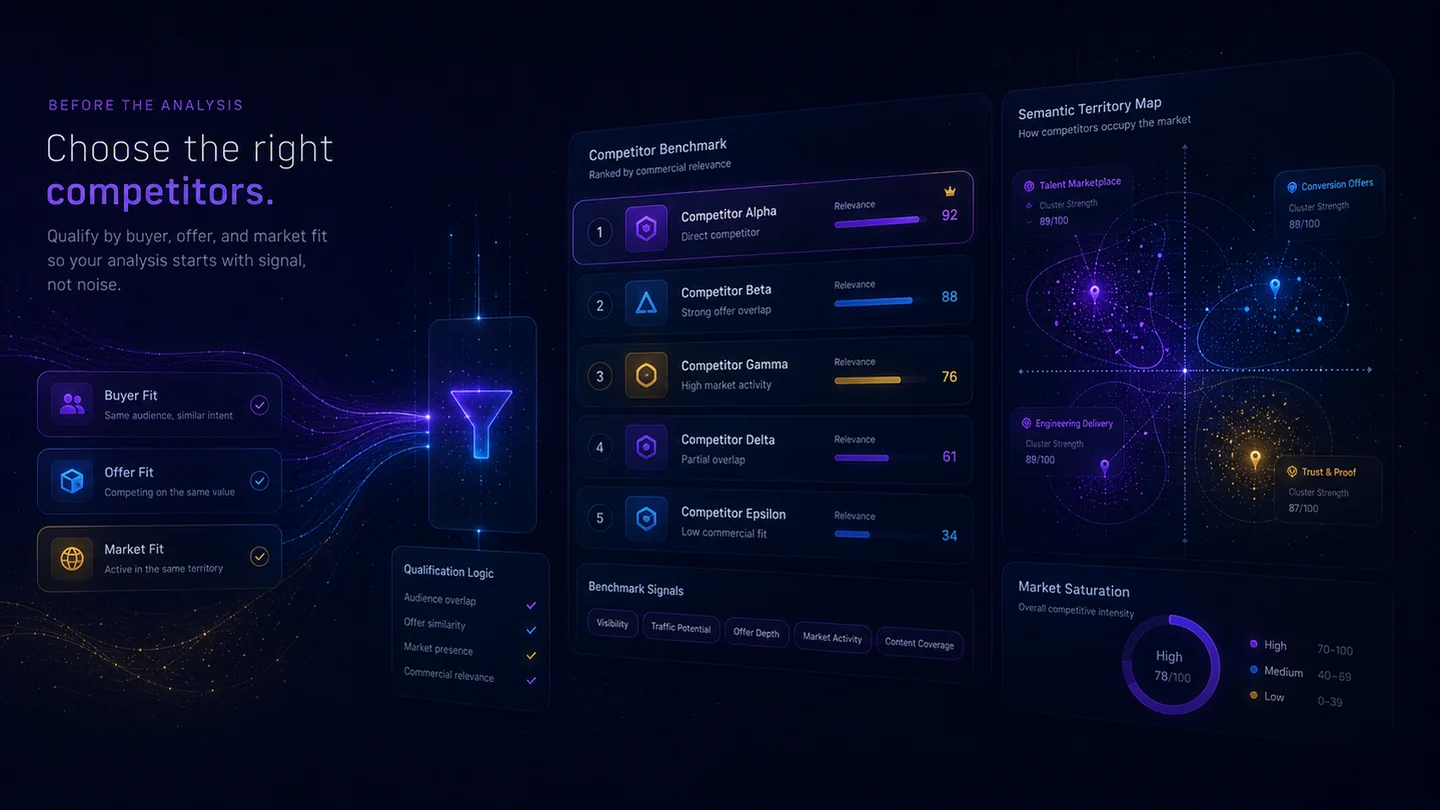

The Library remains available.
Research & Insights
Original frameworks for choosing the right competitors, separating evidence from assumption and directing the next meaningful growth investment.
Editorial purpose
SERPIFAI publishes practical decision frameworks for leaders preparing consequential search, content, authority and market investments. The objective is not to create another reading backlog. It is to improve the quality of the next decision.
Featured framework
Competitor qualification · Framework 01
A visible domain is not automatically a business competitor. Qualify buyer, offer and market overlap before the evidence collection begins.
Read the framework
Flagship insight series
01
Qualify competitors by buyer choice, offer overlap, market scope and decision relevance—not visibility alone.
 02
Build a traceable chain from observed source to interpretation, limitation and decision impact.
 03
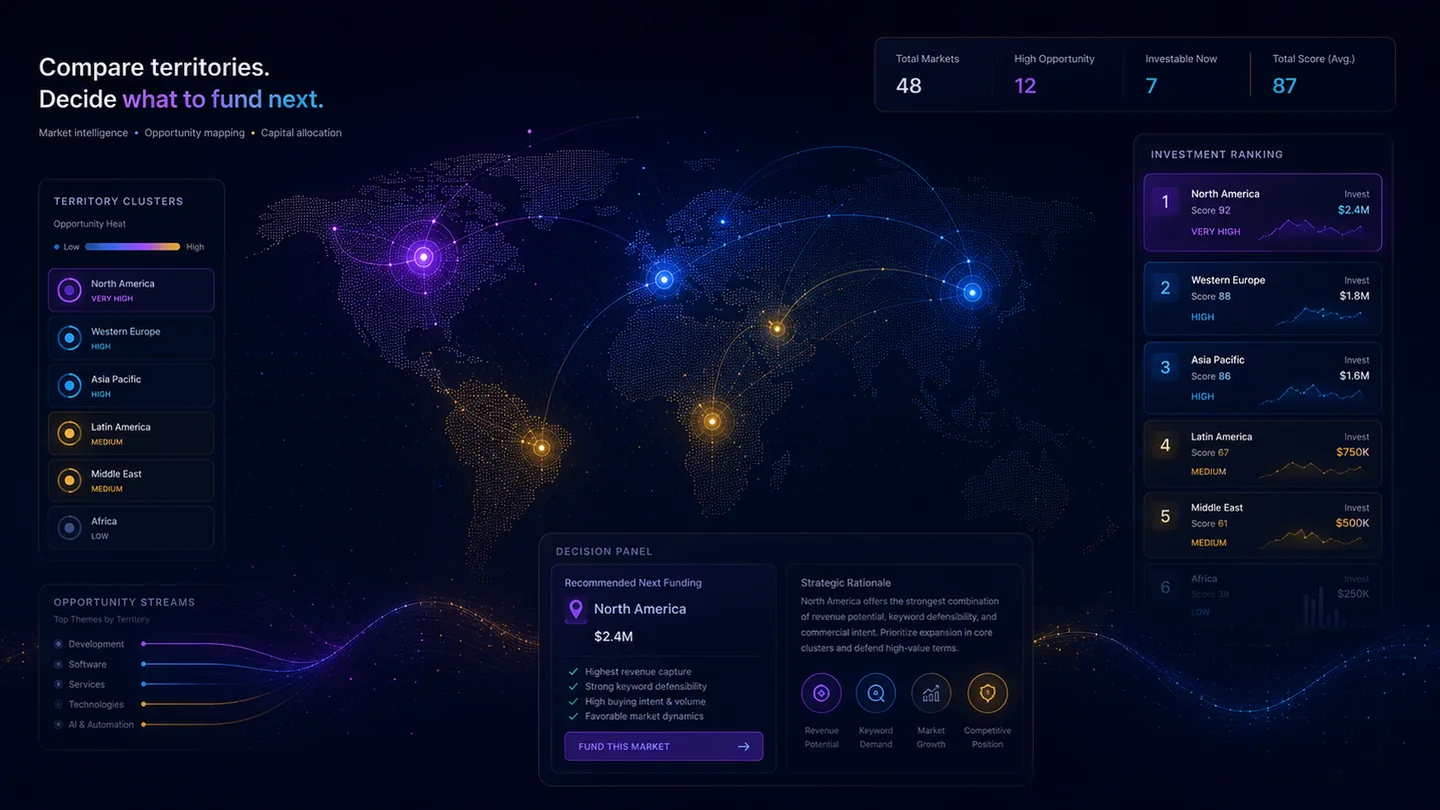
Rank commercial relevance, evidence strength, cost, defensibility and measurement speed before committing capital.
Complete authority library
75 supporting publications extend the three flagship frameworks across competitor qualification, evidence governance, investment prioritisation, executive decisions, AEO/GEO and applied research.
Qualify the organisations, substitutes and market actors that truly belong in the decision.

Learn the difference between SEO competitors, business competitors and decision competitors—and when each belongs in an analysis.

Choose a defensible number of SEO competitors using decision scope, buyer relevance, market coverage and analytical usefulness.

Learn when publishers, directories and marketplaces belong in competitor analysis as context—not direct commercial rivals.

Identify commercially relevant local SEO competitors using service area, buyer choice, proximity, visibility and market fit.

Qualify B2B and SaaS competitors across buyer roles, product scope, decision stages, substitutes and in-house alternatives.

Use clear drift triggers to update an SEO competitor set when products, markets, buyers, channels or evidence materially change.

Separate direct, indirect, substitute, marketplace, publisher, reference and emerging competitors before analysis.

Use a layered competitor model that separates enterprise-wide, market-specific and location-specific rivals.

Classify competitors by the role they play in the buyer decision and the evidence they can legitimately provide.

Evaluate emerging competitors through current capability, buyer relevance, trajectory evidence and uncertainty rather than inventing historical strength.

Build separate competitor views for each product, buyer need and funnel stage instead of forcing one enterprise-wide list.

Use sales, customer and win/loss evidence to test whether search-visible domains appear in real buying decisions.
Trace observations, inference, confidence, contradiction, provenance and unresolved uncertainty.

Evaluate competitor evidence by source proximity, recency, relevance, reproducibility, independence and decision impact.

Use transparent confidence levels in competitor analysis without unsupported percentages, decorative scores or false statistical certainty.
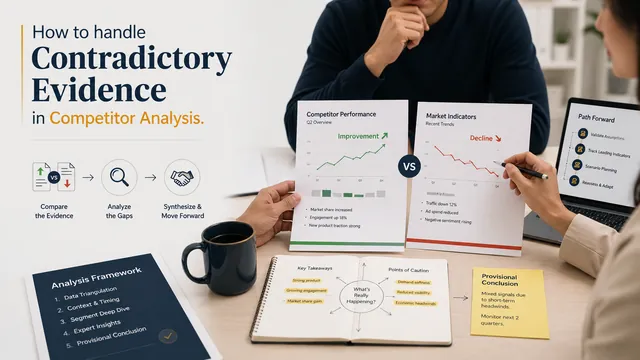
Resolve contradictory competitor evidence without hiding uncertainty, averaging away conflict or forcing premature conclusions.

Use a simple evidence taxonomy to separate direct observations, reasoned inferences, contradictions and unresolved gaps.

Understand when competitor scores clarify a decision and when composite numbers hide assumptions, contradictions and weak evidence.

Create a competitor evidence record with source, observation, interpretation, confidence, limitation and decision impact.

Score competitor evidence by source, collection date, directness, reproducibility, market relevance and decay risk.

Decide whether an SEO query sample is representative enough across intent, geography, device, funnel stage and coverage gaps.

Match each SEO data source to the claims it can support, the uncertainty it carries and the decisions it should not control.

Make material competitor findings reproducible through source records, collection conditions, methods, transformations and decision logic.

Record the claims, markets, outcomes and causal interpretations that available evidence cannot responsibly support.

Retire or downgrade competitor evidence when market change, source decay or decision risk makes the original observation unreliable.

Build a query sample from decision-relevant strata, documented selection rules and explicit coverage gaps.

A preregistration and blind inter-reviewer standard for competitor analysis validation, decision-equivalent agreement and transparent publication of failed rebuilds.
Compare opportunity size, commercial relevance, readiness, time to value and defensibility.

Prioritise SEO opportunities using buyer value, decision-stage relevance, evidence, feasibility, defensibility and measurement speed.

Understand why keyword volume can overstate commercial opportunity and how to compare value, fit, evidence, cost and defensibility.

Compare opportunity territories using commercial relevance, evidence, defensibility, burden, measurement speed and reversibility.

Connect buyer problems, intent, offer relevance, competitor strength, current authority and expected investment before prioritizing SEO territories.

Fund the opportunity that passes commercial and evidence gates and can be executed as a credible learning tranche—not automatically the largest market.

Balance how quickly an SEO move can produce useful evidence with how difficult the resulting position will be to imitate or displace.

Allocate budget by the binding constraint in the chosen territory rather than using fixed percentages across technical SEO, content and authority.
Release bounded choices with ownership, alternatives, conditions and review rules.

Turn growth analysis into an accountable four-state investment queue with conditions, owners, evidence and review dates.

Set evidence-based expansion, revision and stop conditions before approving an SEO or content investment.

Convert competitor analysis into a one-page executive memo with the question, recommendation, evidence, risks, actions and reversal conditions.

Test technical readiness, editorial capacity, expertise, authority, budget, time and ownership before funding an SEO opportunity.

Define leading indicators, lagging indicators, review dates, stop conditions, expansion conditions and reversal triggers after an SEO decision.

Translate every recommendation into owners, prerequisites, evidence tasks, implementation tranches and review decisions across 30, 60 and 90 days.
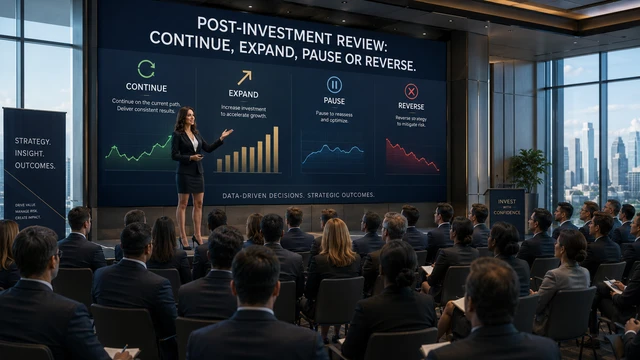
Review an SEO investment against its original thesis, evidence thresholds, costs and reversal conditions before allocating the next tranche.
Define the buyer, offer, market and decision before evidence collection begins.

Define buyer, offer, market, geography, decision, budget, time horizon and exclusions before competitor analysis begins.

Use four explicit boundaries—buyer, offer, market and geography—to determine whether competitor evidence is comparable.

Commit budget when the evidence is sufficient for the size, reversibility and risk of the next tranche—not when every uncertainty disappears.

Define the commercial action that may change before selecting competitors, queries, tools or evidence sources.

Wrong competitor selection misdirects content, authority, product positioning and budget by optimizing against organisations that cannot win the same decision.

Decline or narrow competitor analysis when the decision is already fixed, no feasible alternative exists, or evidence cannot influence action.
Research retrieval, source inclusion, entity clarity and answer-system visibility without overstating what one observation proves.

Evaluate entity clarity, source credibility, relationships, extraction-ready answers, citation eligibility, structured data and answer visibility.

Entity coverage shows whether a source represents the concepts and relationships needed for retrieval; keyword overlap shows shared language or query visibility.
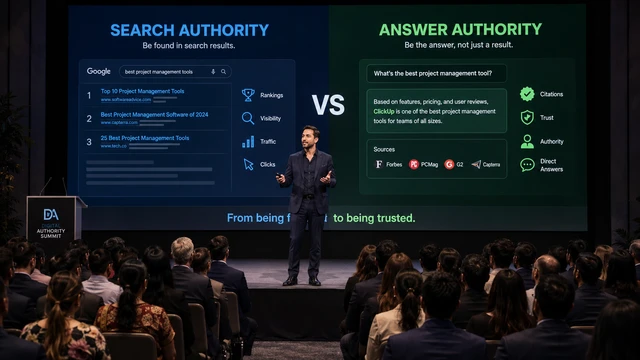
Search authority reflects the ability to earn visibility across queries; answer authority reflects the ability to provide credible, extractable support for a specific question.

Extraction-ready content makes definitions, evidence, relationships, limitations and decision rules explicit enough to be reused without losing essential context.

AI-search competitor analysis should compare which entities, sources and passages are selected for answers—not merely which domains rank in conventional results.

Technical eligibility and structured data can clarify access and identity, but they cannot compensate for unsupported, ambiguous or low-value content.

Citation analysis in AI search should measure source eligibility, role, passage support and repeated inclusion under a controlled query sample.
See the decision models applied to transparent fictional composites across markets and operating contexts.

A section-by-section model for a traceable competitive decision brief, including evidence states, execution ownership and reversal conditions.

This fictional composite shows how an ecommerce business can separate product substitutes, retailers, marketplaces, publishers and manufacturer references.
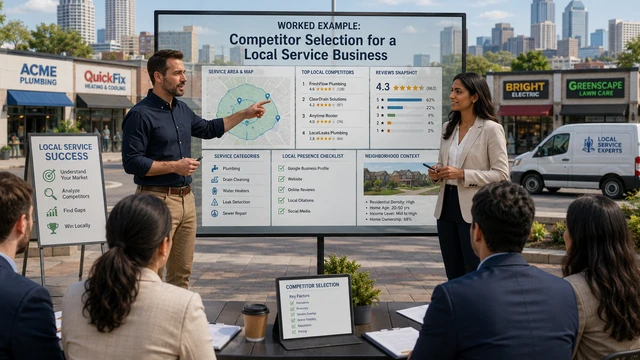
This fictional composite demonstrates how service radius, availability, offer fit and local decision behaviour should control competitor selection.

A fictional professional-services case separating commercial substitutes from publishers, associations, directories and software alternatives.

This fictional composite demonstrates a higher evidence threshold for healthcare competitor analysis without making clinical or patient-outcome claims.

A transparent fictional composite showing how to qualify a B2B SaaS competitor set without confusing visibility, integrations and buyer substitutability.
Complete and interpret the practical decision tools with bounded examples and escalation guidance.
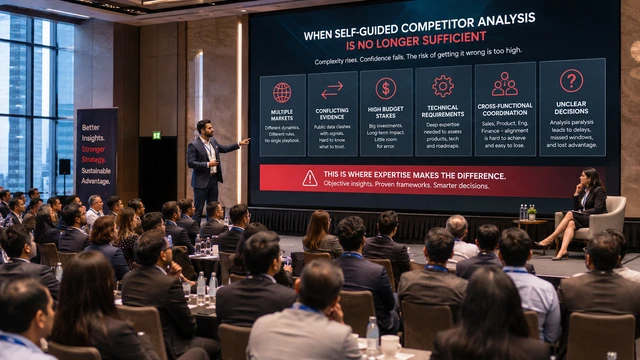
Self-guided analysis should escalate when decision stakes, evidence complexity, disagreement or implementation risk exceed the team’s ability to review the method independently.

The Decision Definition Canvas converts a broad research request into one accountable question with explicit buyer, offer, market, evidence and action boundaries.

The toolkit evidence audit should trace every material claim to a current source, evidence state, limitation and decision use.
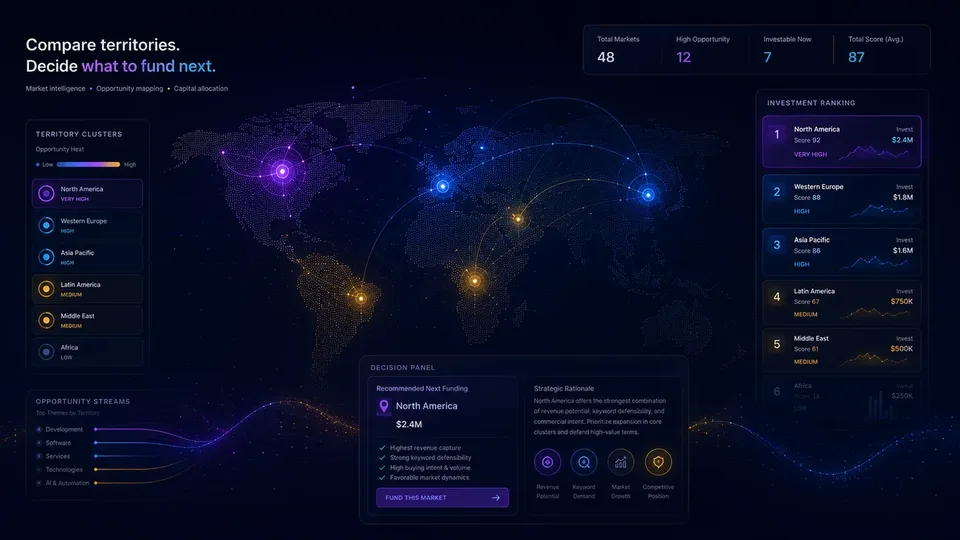
The executive memo should state one decision, its evidence basis, rejected alternatives, execution owner and reversal conditions without hiding uncertainty.
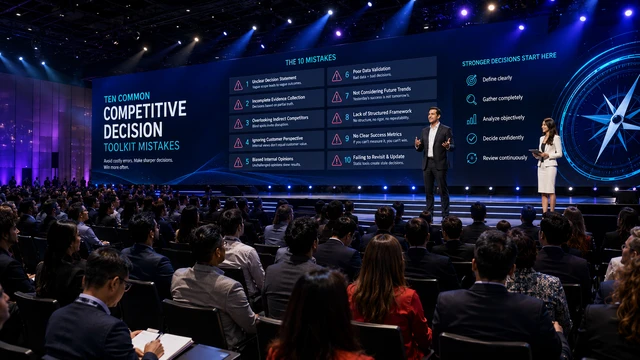
Most toolkit failures come from collapsing distinct decisions, competitor roles and evidence states—not from incomplete formatting.

This fictional composite demonstrates how the toolkit’s five worksheets connect without presenting invented client outcomes.

The Opportunity Matrix should compare commercial relevance, evidence strength, readiness and defensibility—not rank traffic potential in isolation.

The scorecard should qualify competitor roles and evidence before comparison; it should not turn judgement into an unsupported league table.
Understand competitor-fit scores, uncertainty, disagreement and the correct verification step.

Use the free Competitor Fit Challenge and Decision Snapshot for bounded screening. Escalate to a free Decision Scope Review when evidence burden, consequence or accountability exceeds the self-guided path; paid work starts only after fit is confirmed.

Confidence should qualify how strongly a result can be used, not inflate or disguise the underlying competitor-fit judgement.

An uncertain result means the current evidence cannot support a stable inclusion or exclusion decision; it is a governed state, not an error.
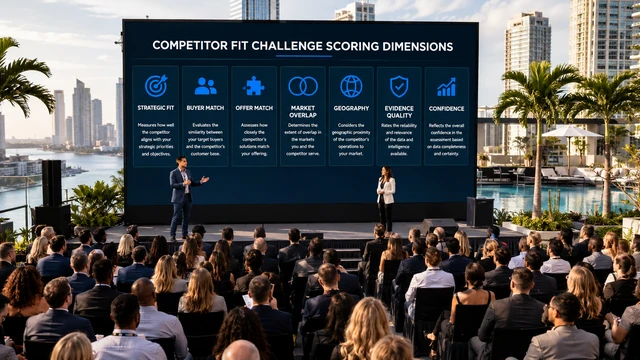
The challenge dimensions translate buyer, offer, market, decision stage, evidence and strategic relevance into a structured conversation about competitor fit.

The challenge should be rerun when the decision context, competitor role, evidence freshness or commercial offer changes materially.

Search visibility discovers candidates, but buyer choice, offer fulfilment and market scope determine whether they belong in the commercial competitor set.

Fictional market examples show how the same visible domain can receive different roles in SaaS, local services, ecommerce and professional-services decisions.

Disagreement is evidence that scope, role or confidence requires review; it should not be hidden inside an average score.
The public library remains the primary browsing experience. Curated collections support deeper topic discovery, while trust documents explain editorial review and accountability.
No matching research was found. Try a broader phrase or select All.
Publishing doctrine
What the source directly supports without interpretation.
What reasoned interpretation suggests—and why.
What remains unknown, contradictory or outside scope.
What to fund, prepare, defer or ignore under stated limits.
Apply the thinking
The public sample shows the evidence chain, ranked action queue, limitations and release gate without presenting invented client outcomes.